
Manu National Park is a megadiverse natural area in southeastern Peru, located in the departments of Cusco and Madre de Dios, between the provinces of Manu and Paucartambo. The area cover 1,909,806 hectares, the park was established on May 29, 1973, and in 1977 UNESCO recognized as Biosphere Reserve and a World Heritage Site.
It extends from 300 meters above sea level at the confluence of the Manu and Madre de Dios rivers to over 4,800 meters above sea level in Apu Kañajhuay mountain. Which offer us a great variety of ecological zones and a Wealth of flora and fauna in all Amazon rainforest. Manu National Park is also a home of richness ethnic groups with varying levels of contact with the outside world, and archaeological treasures that reveal lost Inca and pre-Inca cities.
The different tourist routes within Manu National Park are located in the designated tourist areas.
Tres Cruces Sunrise. Located at the entrance of Manu National Park 13 km away from Acjanacu checkpoint, this viewpoint offers a spectacular sunrise. Situated at over 3,800 meters above the Amazonian plain, it gives the impression that the sun appears twice in a single sunrise. Panoramic views of the southern highlands and the spectacular cloud forest, the Amazonian plain, the great Madre de Dios River and Pantiacolla Mountain. The visit is recommended from May to August.
In Acjanacu sector, there are small tourist circuits and 7 km (3-hour) of hikes along the Erikson trail to the Pillahuata ranch. The entire route descends from the high Andean grasslands to the cloud forest. For the Erikson Trail hike, it is recommended to have a guide and a vehicle available.
Pay the entrance fee at the Acjanacu checkpoint.
This is one of the few archaeological and cultural sites open for tourists in Manu National Park. Visitors can hike, navigate small rivers in small boats called peque peques, steered by the local Matsigenka people, and visit the native Matsigenka community of Palotoa Teparo.
The Pusharo petroglyphs are one of the largest cultural expressions found in the Peruvian Amazon rainforest. They are zoomorphic and anthropomorphic figures carved in low relief, concentrated on various panels of solid rock in Meganto canyon. It is a unique place that holds the mystery of legendary cities lost in the Amazon.
It is located northeast of Manu National Park. Good reference point Santa Cruz checkpoint. Every excursions depart from Cusco city and last 3 to 4 days. Entrance permit is required, and a professional guide is always important.
This sector begins at the confluence of the Madre de Dios and Manu rivers, located a few minutes by boat from the town of Boca Manu (Fizcarrard District). Where the exuberance of the Amazonian plains can be appreciated along this tourist area of Manu Park. There are five areas which it has been designated for visiting and observing a great diversity of flora and fauna. The entire tour of reserved zone is conducted by outboard motorboat, with a professional guide and an authorized tour agency.
Limonal Checkpoint: This is where visitors present their entry document to the reserved zone. Limonal offers small trails through the primary forest and an elevated platform in the middle of a palm grove.
Brashco lake: Located a few minutes from the confluence of the Manu river and Pinquen river and a two-hour boat ride from the Limonal Checkpoint. This lake offers a small wooden dock and a small catamaran with paddles for enter and visit the lake and appreciate some black caimans, dozens species of birds and a family of giant otters that are occasionally seen fishing in the lake and also offers paths to observe different groups of monkeys and wild pigs.
Otorongo lake. Located two and a half hours by boat from Brashco lake, this lake offers an observation tower on its shore, a wooden dock for observing giant otters and dozens species of birds, as well as caimans and turtles. Several trails are available for exploring and observing different species of monkeys, such as the woolly monkey and spider monkey.
Salvador lake. This lake is the heart of the Manu Reserve zone and is located 40 minutes away from Otorongo lake (by boat). It is highly recommended for its rich diversity of flora and fauna, both on the lake itself and along the various trails that facilitate wildlife observation. Salvador lake is the largest lake in Manu and the most visited by tourists. It offers a comfortable catamaran with paddles and two wooden docks for observing the large population of giant otters, black caimans, turtles, various groups of monkeys, and a good number of species of birds, all within a well-balanced natural environment.
Parrot and macaw clay lick. It is located at 800 meters away from Casa Matsigenka lodge. The clay lick is a wall that attracts several groups of parrots and macaws, where they find mineral supplements for their varied diet. The site offers a wooden hide for observation.
Pakitza Checkpoint. This is the last checkpoint within the Manu Reserved Zone and is located one hour by boat from the area of Salvador Lake. The site offers several trails for exploring the terra firme forest and encountering a variety of important wildlife, including macaws, emperor monkeys, harpy eagles, and a mammal clay lick.
The Manu River. From the confluence of Madre de Dios River and Manu Rivers, this excursion start navigating by boat along the calm waters of the Manu river to the last checkpoint Pakitza. This trip takes several-hour by boat, which is highly rewarding for every visitor. The vast sand beaches and forest edges along the Manu river are places where you can observe hundreds of turtles, black and white caimans, families of capybaras, different groups of monkeys, dozens of species of shorebirds, and birds in the treetops. Jaguars are seen in various locations throughout their territory very early in the morning and late in the day, while are hunting or resting on the river sides. Manu National Park has become one of the best places in Peru to spot this magnificent feline, with an 80% of chance to sightings during the dry season from May to November.
Lodges in Manu reserved zone. private concessions.
Refugio Romero Lodge: Located one hour by boat from Limonal checkpoint.
Casa Matsiguenca Lodge: An ecotourism project created by two natives communities within the park (Tayacome and Yomibato) in the 1990s with especial funding of German NGO to improve their quality of life and preserve their identity. In these days they work in an organized manner with tourism companies in Manu.
Jaguar Eco Lodge: Located a few minutes from Casa Matsiguenca Lodge.
Albergue Aguaje: Located a few minutes from casa Matsigenka lodge and a 20-minute away from Salvador lake.
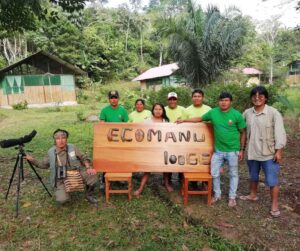
Hiking and exploring the different types of forest, a spectacular spot for birdwatching, photography and enjoying the sunrise.
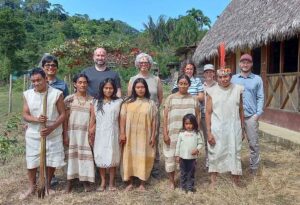
Manu National Park is a megadiverse natural area in southeastern Peru, located in the departments of Cusco and Madre de Dios, between the provinces of Manu and Paucartambo.
Book your tour
Book your tour
Av. La Amistad L 8. San Sebastián, Cusco - Perú.
© 2017 – 2023 Eco Manu Lodge